Learn / Lesson 4
How to write a YouTube script people watch to the end
Viewers leave a video in three places: the first 30 seconds, a middle that drags, and an ending they can hear coming. Here is a one-minute script that holds them through all three, written in Scenarist’s YouTube Video format, and the four parts of it that do the work.
Chapters
- 0:00Where viewers leave
- 0:161. The hook
- 0:402. The pictures
- 0:553. The middle
- 1:164. The end
- 1:33YouTube scripts in Scenarist
- 1:51The whole script
Where viewers leave
Viewers leave a video in three places: in the first 30 seconds, in a middle that drags, and at an ending they can hear coming. Each one has a fix, and each fix is a part of the script:
- The hook, for the first 30 seconds.
- The pictures, under every line.
- The middle, joined with “but” and “therefore”.
- The end, with one call to action.
The example is a one-minute video, typed in Scenarist’s YouTube Video format, and a small screenwriting lesson of its own: Why Every Screenplay Is in Courier. In that format every line has a type: a hook, content, a B-roll note, on-screen text or a call to action.
1. The hook
YouTube Studio tracks how many viewers are still watching after the first 30 seconds, and calls that number the intro. When it’s low, YouTube’s own advice is to make the title and thumbnail match the video, and to rework those 30 seconds. So don’t spend them on hello: no “welcome back”, and no “don’t forget to subscribe” yet.
Open on what the title promised, then raise a question. This video is called Why Every Screenplay Is in Courier, so the first line says exactly that, and then asks what a font has to do with a stopwatch:
Why Every Screenplay Is in Courier · The hook
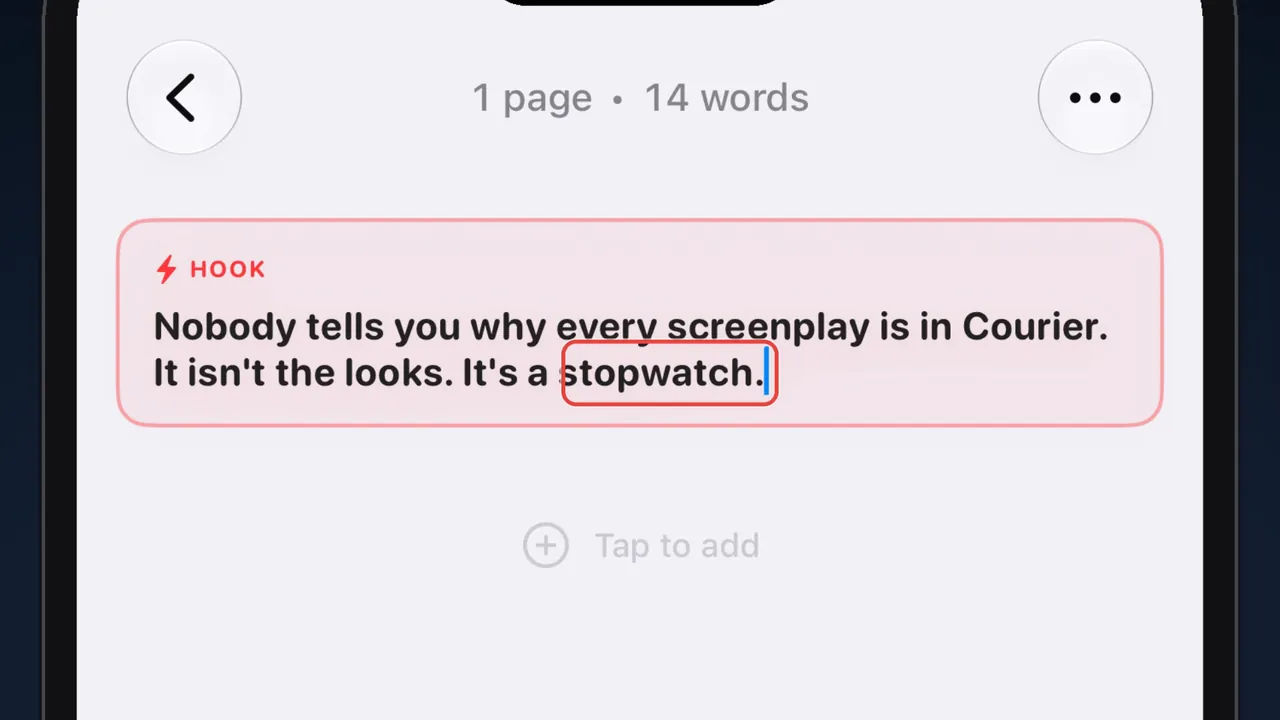
HookNobody tells you why every screenplay is in Courier. It isn't the looks. It's a stopwatch.
The question is the reason to stay. Now the script owes an answer, and the middle pays it.
2. The pictures
Under every line, write what we’ll see: a B-roll note for the footage, and on-screen text for the words that matter. A picture that changes every few seconds gives people a reason to keep looking, and you’ll know what to shoot before you start.
Why Every Screenplay Is in Courier · The pictures
HookNobody tells you why every screenplay is in Courier. It isn't the looks. It's a stopwatch.
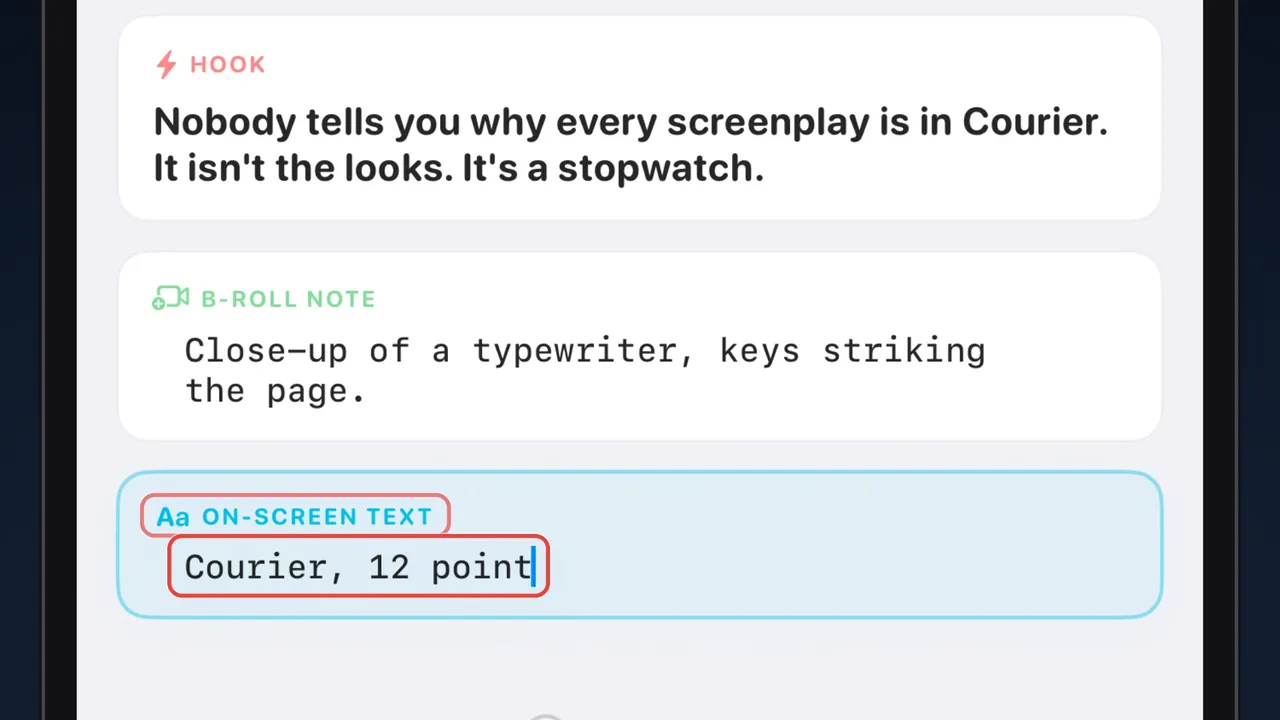
B-rollClose-up of a typewriter, keys striking the page.
On screenCourier, 12 point
Write the notes like a shot list, what the camera sees and nothing else, and keep on-screen text to a few words. Here it’s the font and its size, so someone who glanced away still has them.
3. The middle
A middle drags when its points are only stacked: this, and then this, and then this. Trey Parker and Matt Stone, who make South Park, gave a class of NYU students a rule for it: if the words between two beats are “and then”, the story is boring. They should be “but” or “therefore”. Then every point causes the next, and there’s always a reason to hear it.
Why Every Screenplay Is in Courier · The middle
ContentIn the 1950s, IBM had Courier drawn for its typewriters. Every letter takes up the same width.
B-rollClose-up of a W and an I, side by side. Same width.
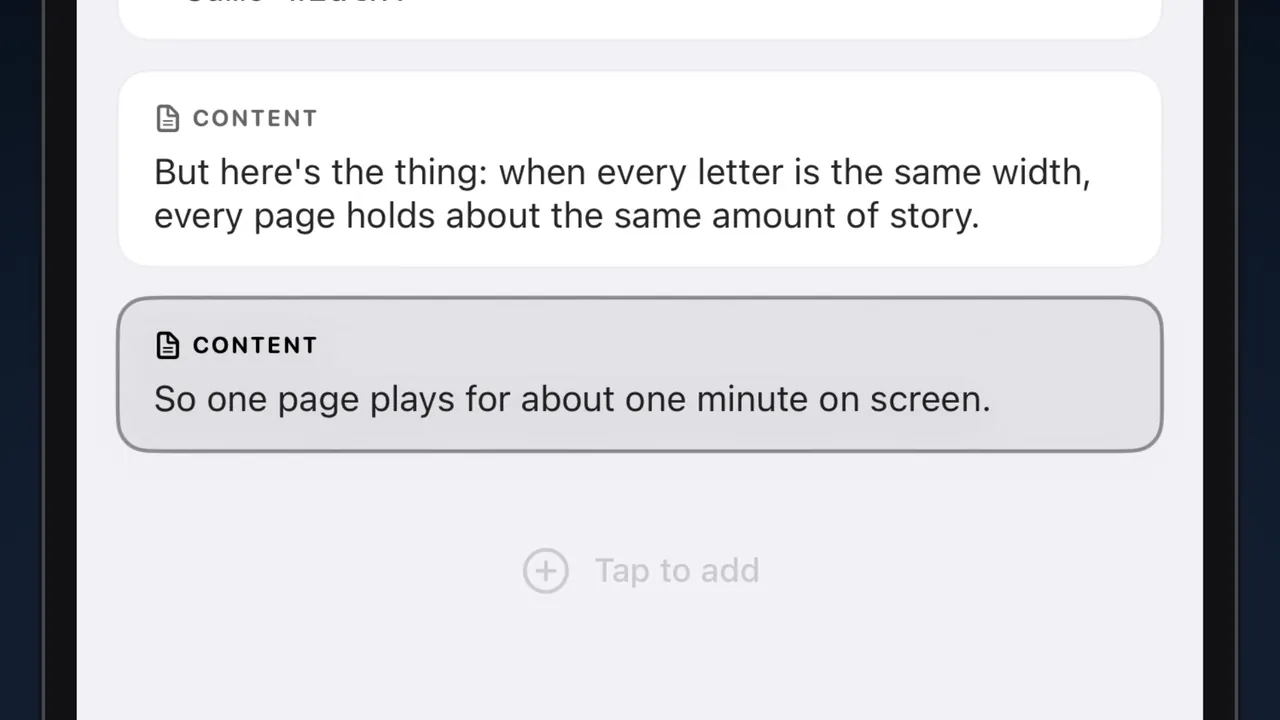
ContentBut here's the thing: when every letter is the same width, every page holds about the same amount of story.
ContentSo one page plays for about one minute on screen.
On screen1 page → 1 minute
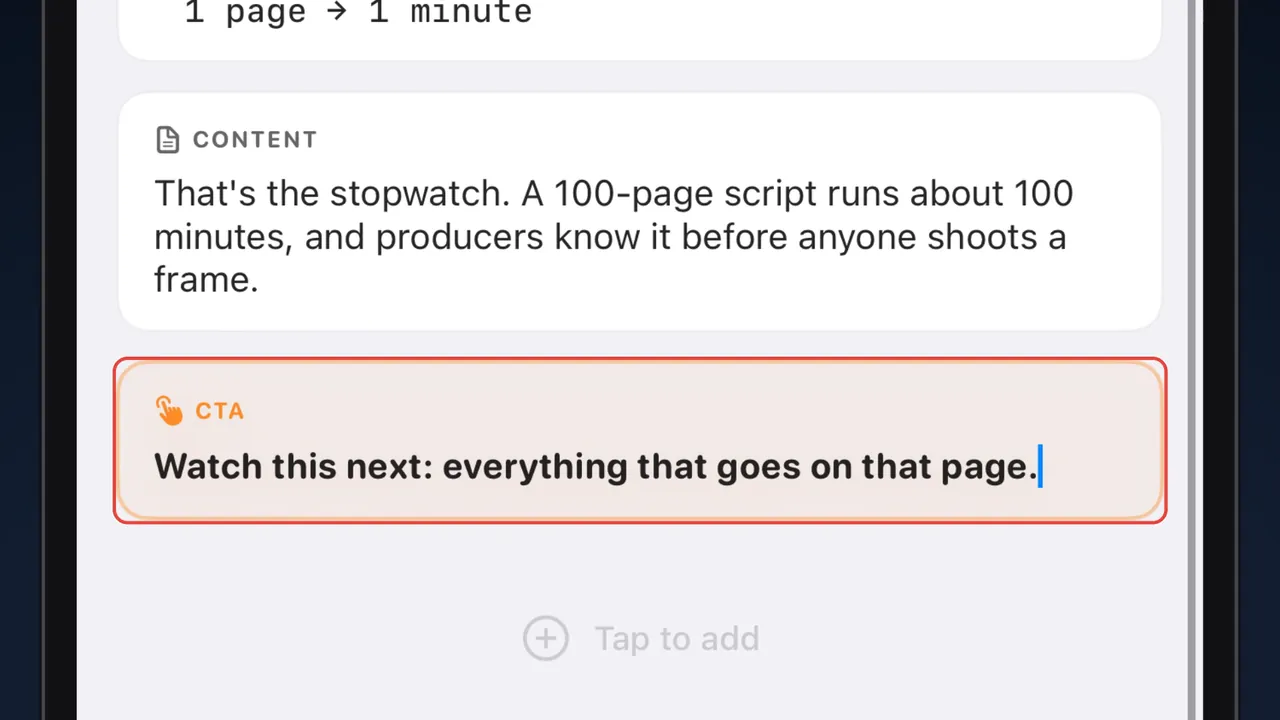
ContentThat's the stopwatch. A 100-page script runs about 100 minutes, and producers know it before anyone shoots a frame.
Every letter is the same width, but that means every page holds the same amount of story, so a page plays for about a minute. That answers the hook’s question, right where a middle would start to sag.
4. The end
Once the payoff lands, stop. Don’t sum it all up, and don’t say “that’s it for today”: a goodbye tells people they can go. Make the call to action the outro. Ask for one thing, and make it the next video:
Why Every Screenplay Is in Courier · The end
CTAWatch this next: everything that goes on that page.
It’s the advice the YouTube scriptwriter George Blackman gives too: the outro is the call to action and nothing more. Send them to another video, and stop talking.
YouTube scripts in Scenarist
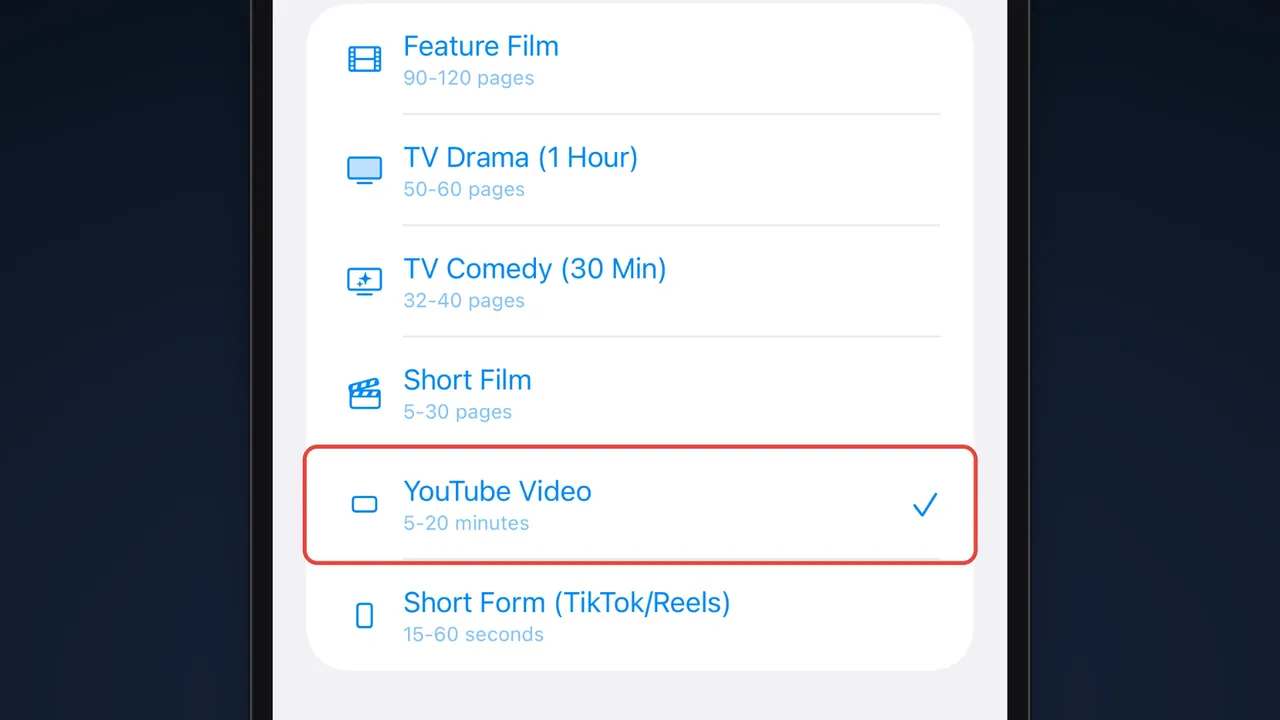
In Scenarist, choose YouTube Video when you start a script. Every line is then a hook, content, a B-roll note, on-screen text or a call to action, one tap apart on the chips above the keyboard, with an ad break and a sponsor read for when you need them.
Above the chips, keys start the line for you, and they change with the line you’re on: openers such as “Did you know…” for a hook, shots such as “Close-up of…” and “Wide shot of…” for a B-roll note, and “But here’s the thing:” for content.
The whole script
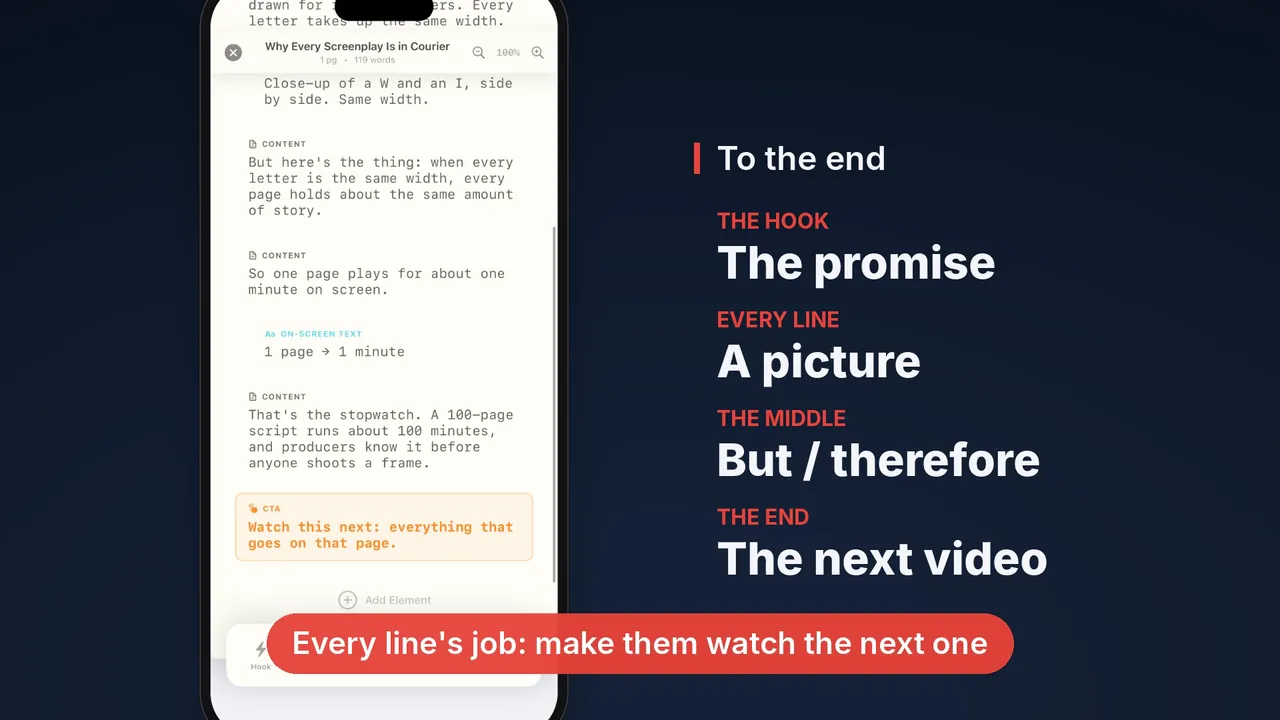
Here is the whole script as it reads in the app. Read it top to bottom: every line has one job, to make them watch the next one.
Why Every Screenplay Is in Courier · The whole script
HookNobody tells you why every screenplay is in Courier. It isn't the looks. It's a stopwatch.
B-rollClose-up of a typewriter, keys striking the page.
On screenCourier, 12 point
ContentIn the 1950s, IBM had Courier drawn for its typewriters. Every letter takes up the same width.
B-rollClose-up of a W and an I, side by side. Same width.
ContentBut here's the thing: when every letter is the same width, every page holds about the same amount of story.
ContentSo one page plays for about one minute on screen.
On screen1 page → 1 minute
ContentThat's the stopwatch. A 100-page script runs about 100 minutes, and producers know it before anyone shoots a frame.
CTAWatch this next: everything that goes on that page.
| Where they leave | The fix | In the script |
|---|---|---|
| The first 30 seconds | Open on the title’s promise, then ask a question | Hook |
| Every line | Write what we’ll see | B-roll note, on-screen text |
| The middle | “But” or “therefore”, never “and then” | Content |
| The end | Stop, and send them to the next video | CTA |
Next: screenplay format
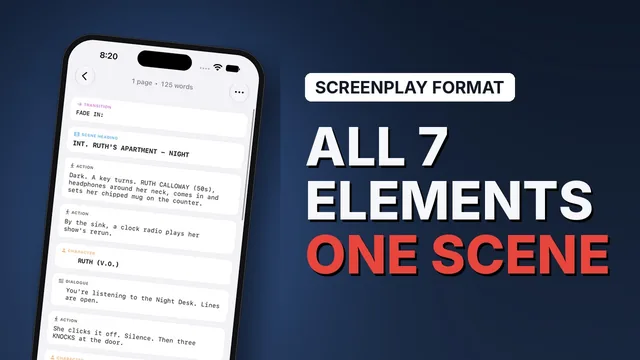
The next lesson goes back to the screenplay page: all seven elements on it, in one scene, and the two you’ll rarely need.
Related guides
The seven screenplay elements
Scene heading to shot, and what each part of the page is for.
What is Fountain?
The plain-text screenplay format, and why it lasts.
Best iPhone screenwriting apps in 2026
Every app you can actually write a draft on, compared.
Write your next video
Scenarist’s YouTube Video format gives every line its type, from the hook to the call to action, with keys that start the line for you, on iPhone, iPad and Mac. Free to start, no account.
Get Scenarist